
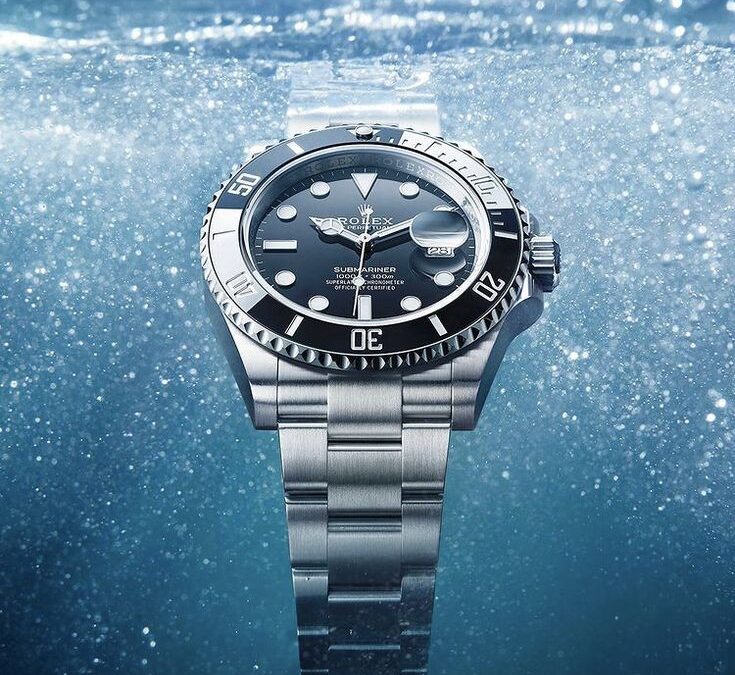
A watch marked “Water Resistant 100m” suggests you can dive deep. This is a common misconception. Water resistance is a laboratory rating. Real-world conditions are different. This article decodes the science behind the labels. We translate lab tests into practical advice.
Master Replica Super Clone Watches has mastered the craft of Waterproofing, providing protection of 100m depth for all models, along with upto 300m depth protection for deep-sea variants. If you want waterproofing and scientific protection like anti-magnetic properties, check out the Replica Rolex Milgauss Super Clone Collection 2025 for the ultimate combo of shields for your preferred taste and expertise.
Decoding Water Resistance Ratings
A water resistance rating measures static pressure. Watchmakers test timepieces in a controlled lab. The watch is stationary. Water pressure increases gradually. A “50m” rating means it withstood pressure equivalent to a 50-meter static water column. This does not simulate a 50-meter swim.
Real-world activities create dynamic pressure. Arm movements during swimming increase force. Water jets from a shower apply localized stress. These forces exceed the static pressure of the lab test.
What Lab Tests Don’t Show
- Dynamic Pressure: Movement through water multiplies force.
- Water Temperature: Sudden changes can compromise seals.
- Chemical Exposure: Soap, shampoo, and saltwater degrade gaskets.
- Time: Seals and gaskets deteriorate with age.
50m Rated: How Much Water Can It Take?
A 50m rating indicates robust resistance. It is suitable for daily wear. It can handle accidental splashes. However, it has clear limitations.
You can do these activities with a 50m watch:
- Handwashing and rain exposure.
- Showering (if explicitly stated by the manufacturer).
- Swimming in a pool with calm, temperate water.
You should avoid these activities with a 50m watch:
- Snorkeling or free diving.
- Jumping into water (high-impact force).
- Jet skiing, waterskiing, or surfing.
How Strong Is 100m Water Resistance?
A 100m rating offers a significant safety margin. It is designed for serious water sports. The internal seals and case construction are more robust. It handles dynamic pressure far better than a 50m watch.
A 100m watch is suitable for:
- Recreational swimming and lap swimming.
- Competitive sailing.
- Snorkeling and shallow free-diving.
- High-impact water sports.
A 100m watch is not suitable for:
- Scuba diving with compressed air. The industry standard for diving starts at 200m.
- Deep-sea saturation diving.
How 100 m Waterproof Lab Tests Differ
Why Is 100 m Considered Safer for Water Exposure?
- Definition: 100 m (10 ATM) withstands double the static pressure of 50 m.
- Lab Simulation: Devices submerged under controlled turbulence and temperature variations.
- Practical Use: Suitable for swimming, snorkeling, and water sports but not deep-sea diving.
Triplet Example: 100 m rating → withstands → higher static and dynamic pressure.
50m vs 100m Waterproofing Tested: Real Results
This semantic table clarifies the practical differences between the two ratings.
| Feature | 50m Water Resistance | 100m Water Resistance |
| Lab Test Withstands | Static pressure of 5 ATM/bar | Static pressure of 10 ATM/bar |
| Real-World Use | Splashes, showering, swimming | Swimming, snorkeling, water sports |
| Not Suitable For | Snorkeling, diving, high-impact | Scuba diving |
| Seal Durability | Standard | Reinforced |
| Best For | Everyday wear, office, light fitness | Active lifestyles, frequent swimming |
Maximize Watch Waterproofing
Water resistance is not permanent. Gaskets made of rubber or silicone can dry out and crack. Crown seals wear down over time. Proper maintenance is essential for longevity.
Follow these steps to protect your watch:
- Annual Check-ups: Have a jeweler pressure test your watch every 1-2 years.
- Avoid Crown Manipulation: Never adjust the crown or push buttons underwater.
- Rinse After Use: Rinse with fresh water after exposure to saltwater or chlorine.
- Avoid Heat: Do not wear your watch in a sauna or hot tub.
Final Summary
Water resistance labels are technical benchmarks, not depth guarantees. A 50m rating protects against splashes and casual swimming. A 100m rating allows for active water sports. Your watch’s longevity depends on understanding this distinction and committing to regular maintenance. Always consult your manufacturer’s manual for specific care instructions.
FAQs on Waterproofing Reality
Is a 100 m rating always twice as waterproof as 50 m?
No. It withstands higher pressure, but depth ratings are lab-controlled.
Can swimming in a pool damage a 50 m rated device?
Generally safe, provided there’s no sudden impact or chemical exposure.
Do water sports require higher ratings than 100 m?
Yes, activities like surfing or jet-skiing need devices rated 200 m or higher.
Does temperature affect waterproof performance?
Yes, extreme heat or cold can compromise seals and pressure resistance.
Are lab-tested waterproof devices reliable long-term?
Only if regularly maintained; gaskets and seals degrade over time.