
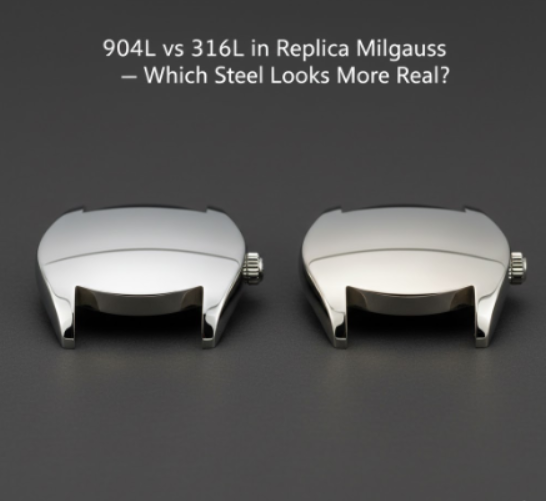
Rolex has used 904L steel for decades because of its resistance to corrosion, its high nickel content, and its richer surface polish. Replica manufacturers often use 316L or hybrid blends, creating noticeable differences in weight, shine, and long-term durability. This page explains how 904L Milgauss replicas vs 316 Milgauss replicas construction affects realism, corrosion behavior, and the on-wrist feel of the watch.
What Makes 904L Steel Different from 316L?
904L contains more nickel and chromium, making it harder, more corrosion-resistant, and slightly heavier than 316L. On the wrist, it produces a denser weight and a richer metallic sheen that collectors associate with genuine Rolex models.
The genuine Milgauss uses 904L Oystersteel, a high-alloy stainless steel normally found in chemical and marine environments.
In contrast, 316L is softer, more common, easier to machine, and cheaper for replica factories to use.
The steel grade directly affects realism because the case, bracelet, and bezel determine tactile feel, light reflection, and oxidation resistance.
Weight Difference in Replica Milgauss Models: 904L vs 316L
904L replicas are typically 8–12 grams heavier than 316L replicas. This small weight change is noticeable and contributes to the authentic Rolex “solid wrist feel.”
Collectors often detect steel grade by weight:
• 904L replicas feel denser and have a slightly colder touch.
• 316L replicas feel lighter and hollow, especially in the bracelet links.
Because the Milgauss is already a weighty watch due to its Faraday cage, using 316L exaggerates the difference even more.
Corrosion Behavior: The Real Test
Rolex uses 904L because it withstands sweat, humidity, and saltwater without pitting.
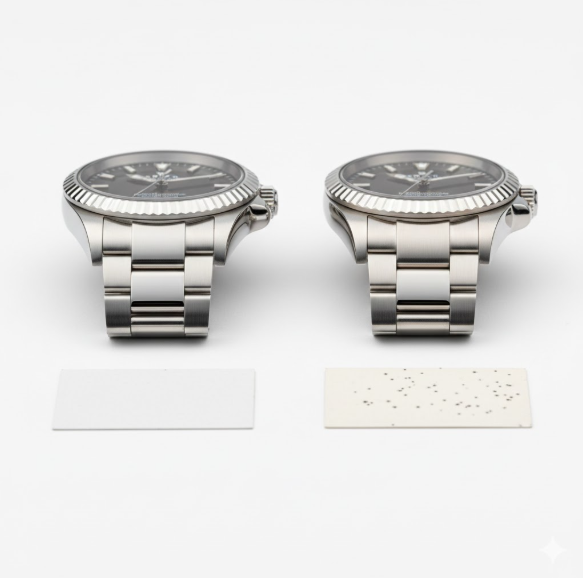
Replica factories that use 316L often show the first signs of corrosion on the caseback edges, clasp, or between bracelet links.
Quick Home Corrosion Check
You can test steel durability by exposing the bracelet underside to:
• slightly salty water mist (24-48 hrs)
• sweat acid exposure (body-heat test)
904L replicas stay clean.
316L replicas may show minute dark spots or discoloration.
Shine & Surface Reflection Differences
904L steel produces a brighter, “wet-metal” shine when polished.
316L has a darker, more muted reflection.
To the trained eye:
904L = crisp, high-contrast reflections
316L = softer, grey-toned reflections
Polished bezels and Oyster links show this difference immediately under light.
Why Replica Factories Often Mix 904L vs 316L?
Some manufacturers use 904L only for the case and 316L for the bracelet to reduce cost.
This creates a mismatched reflection and weight, a detail collectors notice quickly.
High-end Milgauss clones (like Master Replica’s 904L ClearDLC designs) use 904L throughout, maintaining uniformity and durability.
What’s the difference between 904L vs 316L in Milgauss replicas?
904L is denser, more corrosion-resistant, and produces a brighter shine like all the Swiss Replica Watches here on Master Replica. 316L is softer, cheaper, and less durable. High-end Milgauss clones use full 904L steel to match Rolex’s weight, finish, and long-term performance.
How does the steel grade change the replica Milgauss weight?
904L replicas are usually 8–12 grams heavier than 316L versions. The added density creates a more authentic Rolex wrist feel, especially in models like the Milgauss that already have a heavy internal shield.
Why does corrosion matter in Milgauss replicas?
Corrosion resistance reflects steel quality. 904L resists sweat, salt, and humidity without pitting, while 316L may show early marks on clasps and bracelet joints. This difference becomes obvious during long-term wear.
How do 904L vs 316L reflect light differently?
904L produces crisp, high-contrast reflections with a “wet-metal” brightness. 316L looks greyer and softer. This shine difference is one of the first realism markers collectors check.
Can replica factories mix both steel grades?
Yes. Many factories use 904L for cases and 316L for bracelets to cut cost. This leads to mismatched shine and reduced durability. Premium clones use full 904L throughout.
The Impact on Realism in Milgauss Replicas
Steel grade is one of the strongest realism indicators because it shapes the watch’s tactile identity.
Even without opening the case, collectors look at steel finish, weight distribution, and corrosion behavior to determine quality.
A technically correct replica should reproduce:
• 904L density
• 904L corrosion resistance
• 904L shine
• 904L bracelet feel
This combination is essential for passing advanced authenticity checks.
Realistic Wear & Longevity
High-grade 904L clones maintain shine longer and resist scratches better when combined with ClearDLC finishing.
316L replicas show:
• quicker surface dulling
• more micro-abrasions
• faster corrosion around screws and pins
Over long-term wear, the difference becomes obvious.
FAQ’s
Do genuine Rolex Milgauss models use 904L steel?
Yes. All modern Milgauss models use 904L Oystersteel, which is more corrosion-resistant and visually brighter than standard 316L steel.
Are 904L replica Milgauss watches heavier?
Typically yes. A 904L case and bracelet add 8–12 grams compared to 316L replicas, improving the on-wrist authenticity.
Can 316L replicas still look good?
They can look good initially, but long-term wear reveals faster dulling, micro-scratches, and corrosion spots that 904L avoids.
How can I tell if a replica uses 904L vs 316L?
Weight, shine, and corrosion resistance are the main clues. 904L has a brighter reflection, denser feel, and better resistance to sweat or salt exposure.